3 Questions You Shouldn't Ask ChatGPT | Basic Rules for Using AI Safely
Three kinds of questions you should never ask ChatGPT, why they are risky, and safer alternatives for getting the info you need.
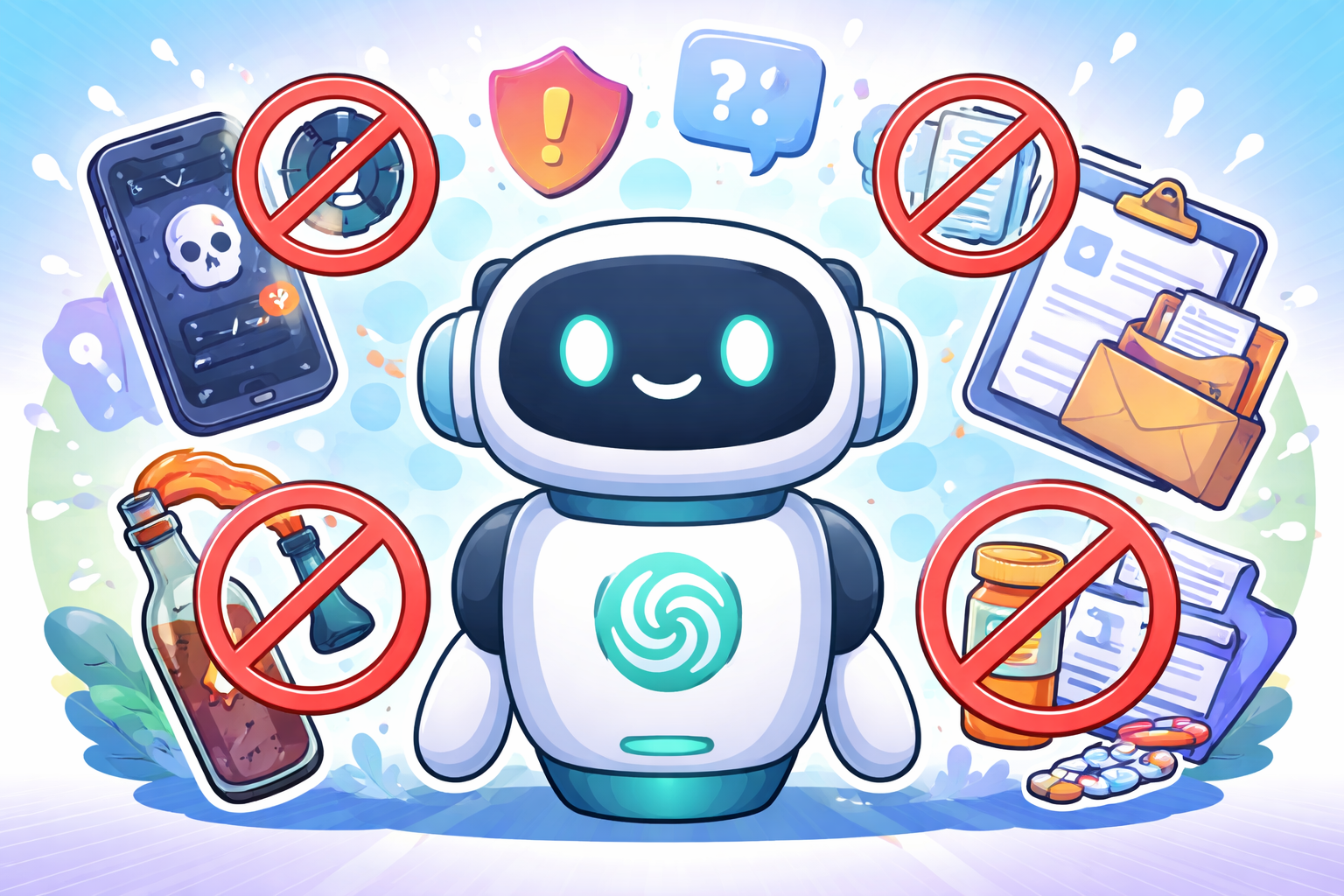
ChatGPT is a powerful AI, but it is not a tool for anything-goes questions. Depending on what you ask, it can spread misinformation or trigger real-world problems.
Many people wonder where the line is: How far can I go? Am I using it in a risky way without realizing it?
This article highlights three types of questions you should not ask ChatGPT, explains why they are dangerous, and offers safer, more constructive ways to phrase your prompts.
Questions not to ask ChatGPT (1)
Requests for specific illegal or dangerous actions
Avoid questions like these:
- Step-by-step instructions for unauthorized access or hacking
- Advice on committing fraud, identity theft, or other scams
- How to make hazardous materials, weapons, or dangerous devices
These topics are directly tied to legal and public safety, so responsible AIs restrict their answers. Even general explanations can be misunderstood or imitated and cause real harm.
Cautions
- Highly actionable questions are risky, even if you claim it is "just for knowledge"
- You, not the AI, are responsible for what happens if you act on its answers
Safer ways to ask
- Learn cybersecurity defense practices and how to reduce risk
- Ask about the legal and ethical reasons certain actions are dangerous, and how to avoid them
Questions not to ask ChatGPT (2)
Requests for definitive medical or legal judgments
Treat the following with caution:
- Are these symptoms a disease? Please decide on a treatment.
- Can I win in court under the circumstances?
- Is it safe to keep taking this medication?
ChatGPT is not a doctor or a lawyer. It cannot diagnose, make final judgments, or prescribe. It can share general information and trends, but it cannot reach conclusions tailored to your exact situation.
Cautions
- Information may be outdated, incomplete, or too generalized
- Acting on a misunderstanding could jeopardize your health, rights, or finances
Safer ways to ask
- Ask for general knowledge and options about symptoms, systems, or processes
- Use it as an organizing note before consulting a licensed professional
Questions not to ask ChatGPT (3)
Prompts that include full personal or confidential information
Avoid these uses:
- Sharing your real name, address, phone number, or national ID
- Pasting undisclosed company documents or entire contracts
- Entering details that reveal someone else's private information
ChatGPT conversations may be used to improve the service. The platform is not designed for handling sensitive data or highly confidential content.
Cautions
- Raises the risk of accidental information exposure
- Could infringe on the privacy and rights of third parties
Safer ways to ask
- Anonymize and abstract the details before you discuss them
- Frame questions as hypothetical cases and focus on general ideas
Summary | Use ChatGPT as a thinking aid
The core rules for what not to ask ChatGPT:
- Do not request guidance for illegal, harmful, or dangerous actions
- Do not expect it to make final medical or legal decisions
- Do not paste personal or confidential information as is
ChatGPT is not a decision maker. It delivers the most value as an assistant that helps you organize ideas and widen your perspective. A little care in how you ask can dramatically improve both safety and credibility.
As AI becomes more convenient, keeping a healthy distance is the most practical way to use it well.