The Era of AI Operating PCs Has Begun: From "Thinking AI" to "Working AI"
AI that can operate a PC is no longer hypothetical. Based on official announcements from OpenAI and Microsoft, this article explains what has changed, what AI agents can do today, and how to use them safely in real work.
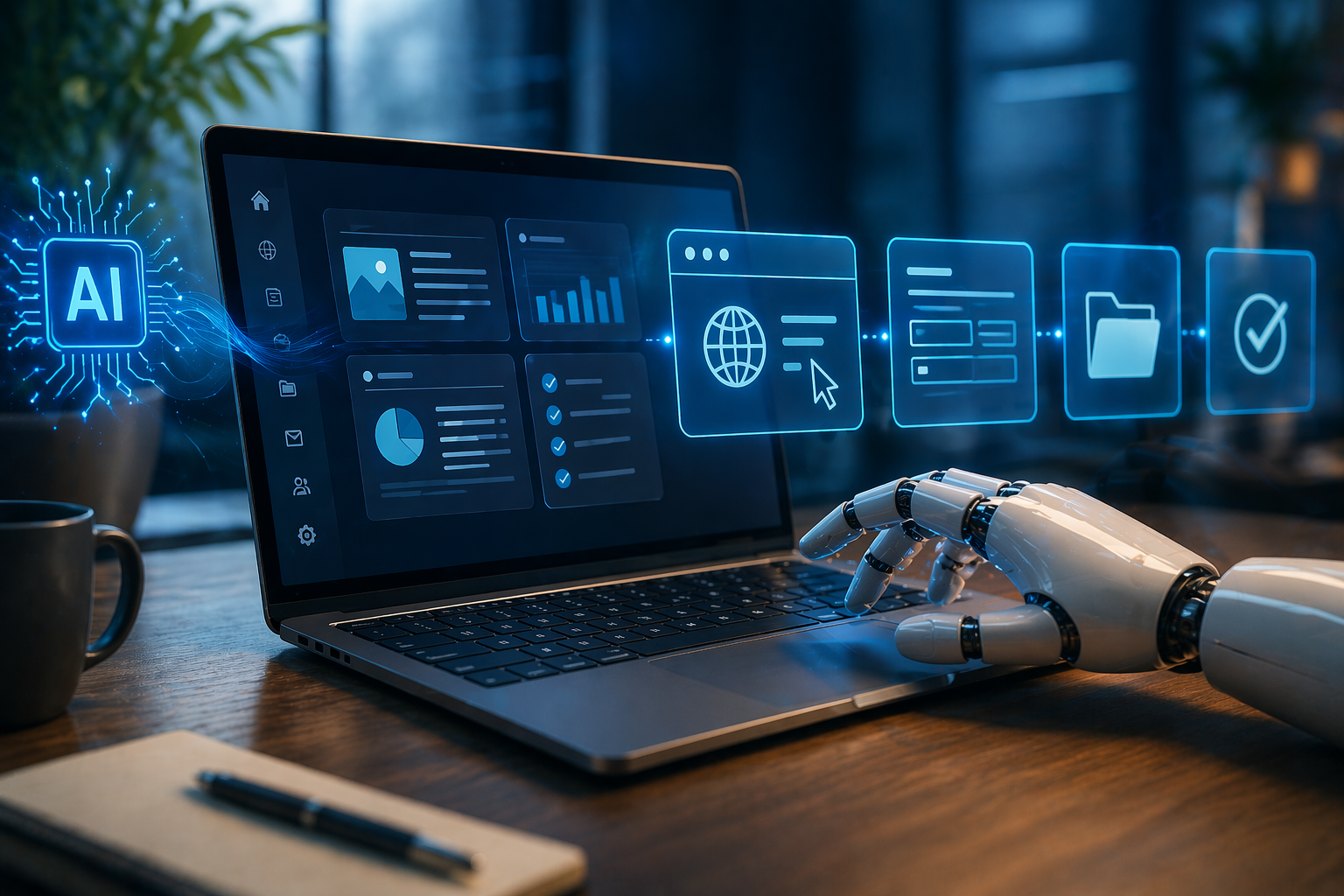
Many people still think of AI as something that writes text or answers questions. That is changing. We are now entering an era in which AI can look at a screen, click buttons, type into fields, and carry out parts of a task on your behalf.
That shift raises reasonable questions. Is this actually useful? Is it safe? How will it change the way people work? In this article, I will break down what the age of AI-operated PCs really means, what is already possible, and how to use these tools realistically based on primary sources such as OpenAI's January 23, 2025 Computer-Using Agent announcement and its July 17, 2025 ChatGPT agent update.
Has the era of AI operating PCs really started?
Yes, it already has.
On January 23, 2025, OpenAI introduced Computer-Using Agent (CUA), a model trained to interact with graphical user interfaces such as buttons, menus, and text fields in a way that resembles how humans use a computer.
Later, on July 17, 2025, OpenAI integrated Operator into the ChatGPT agent experience and officially presented AI systems that can use a browser to click, type, and scroll through tasks.
The biggest benefit is that it reduces the old two-step workflow of "find the information first, then do the task yourself." The downside is that mistakes can now happen at the action layer, not just the answer layer. Sensitive actions such as sending messages, deleting files, or confirming payments still require human oversight.
The broader shift is clear: the value of AI is moving from answering questions to getting work done.
What is changing
- AI can now perform clicks, typing, and other on-screen actions
- Browser-based task execution is becoming an official product feature
- Multi-step tasks can be handled in one workflow
- Human approval is increasingly built into the design
What can AI agents actually do today?
AI is no longer just a research assistant.
OpenAI describes Computer-Using Agent as a system that can directly interact with interfaces and handle tasks such as filling in forms or completing booking-related steps. In practice, that means AI can already support a range of operational work.
This is where the productivity upside becomes obvious. Repetitive work can be reduced significantly. At the same time, the quality of the result still depends on the quality of the model's judgment, so final decisions should remain with a person.
In real-world use, AI tends to deliver value earlier in administrative and process-heavy work than in deeply creative work.
What AI can help with
- Research and information gathering
- Filling out forms
- Updating tables or structured data
- Drafting routine documents
- Comparing and organizing information across multiple pages
Tasks that still need careful human review
- Payment confirmation
- Sending emails or messages
- File deletion
- Contract-related decisions
- Final medical or financial judgment
Why is this trend accelerating now?
This is not only about better model performance.
It is also about a strategic shift from "AI that answers" to "AI that executes." Companies are investing in agents that can move through workflows, not just chat about them.
Microsoft has also announced continued investment in agent-based AI through Copilot Studio, with a focus on improving multi-step task execution.
The upside is straightforward: time savings become much easier to measure when AI helps complete actual workflows. The tradeoff is that permissions, safeguards, and review processes become far more important.
The key observation is that AI is starting to function as part of the workflow itself, not simply as an alternative to search.
Why adoption is speeding up
- Chat-based AI could explain tasks, but not finish them
- Companies are prioritizing automation of practical business processes
- GUI-capable models have reached a usable stage
- Agent-style AI is being integrated into real products
How will work and daily life change?
The first wave of change is unlikely to hit the most creative work.
It will affect repetitive work first.
That includes many of the tasks people postpone because they are tedious rather than difficult.
The benefit is not only speed. It also lowers the mental friction of getting started. The risk, however, is that people may trust the process too much and skip necessary checks.
What we are seeing so far is not simply AI replacing jobs. More often, it is AI removing the tedious parts of a job.
Types of work most likely to change first
- Routine data entry
- Information organization
- Post-meeting summaries
- Preliminary research
- Preparation of internal documents
Everyday situations where this becomes useful
- Organizing appointment options
- Managing household budgets
- Preparing for travel
- Comparing products before purchase
- Getting documents ready
What should new users decide first?
The first question is not "What should I delegate to AI?"
It is "What should I never delegate to AI?"
OpenAI has explained that Operator is designed so users can take over when needed. That handoff model matters because it reflects the most realistic near-term future for AI agents: partial autonomy with human approval at critical steps.
The advantage of this approach is stronger safety. The drawback is that it requires clear rules from the beginning.
What we do not have official confirmation on is the exact timeline for fully autonomous PC-operating AI becoming mainstream. The more realistic assumption for now is that semi-autonomous systems with human approval will remain the standard for the foreseeable future.
Safety rules worth setting early
- Always review before sending anything
- Do not allow AI to complete payments on its own
- Require approval for deletion-related actions
- Limit what data the AI can access or share
- Separate permissions by task and risk level
Good starting points for adoption
- Weekly administrative work
- Tasks that are limited to preparation or drafting
- Work that can be undone
- Personal productivity tasks
- Processes that leave a clear history
Summary
The era of AI operating PCs is no longer theoretical. It has already started.
OpenAI introduced Computer-Using Agent on January 23, 2025, and expanded agent-based capabilities in ChatGPT on July 17, 2025. Microsoft is also pushing further into agentic workflow automation through Copilot.
Three points matter most.
First, AI is evolving from answering to executing.
Second, safety design matters more than ever.
Third, the best place to start is with repetitive, low-risk tasks.
AI clicking and typing on behalf of humans is not a distant future scenario. It is already here. The most practical way to benefit from it today is to start small, keep humans in the loop, and apply it first to everyday PC work that is repetitive, reversible, and easy to review.