Why Did GPT-4o Disappear? What Happened and Why OpenAI Retired It
Why did GPT-4o disappear from ChatGPT? This article explains the retirement timeline, the reason behind the change, and how GPT-4o relates to newer successor models based on official OpenAI announcements.
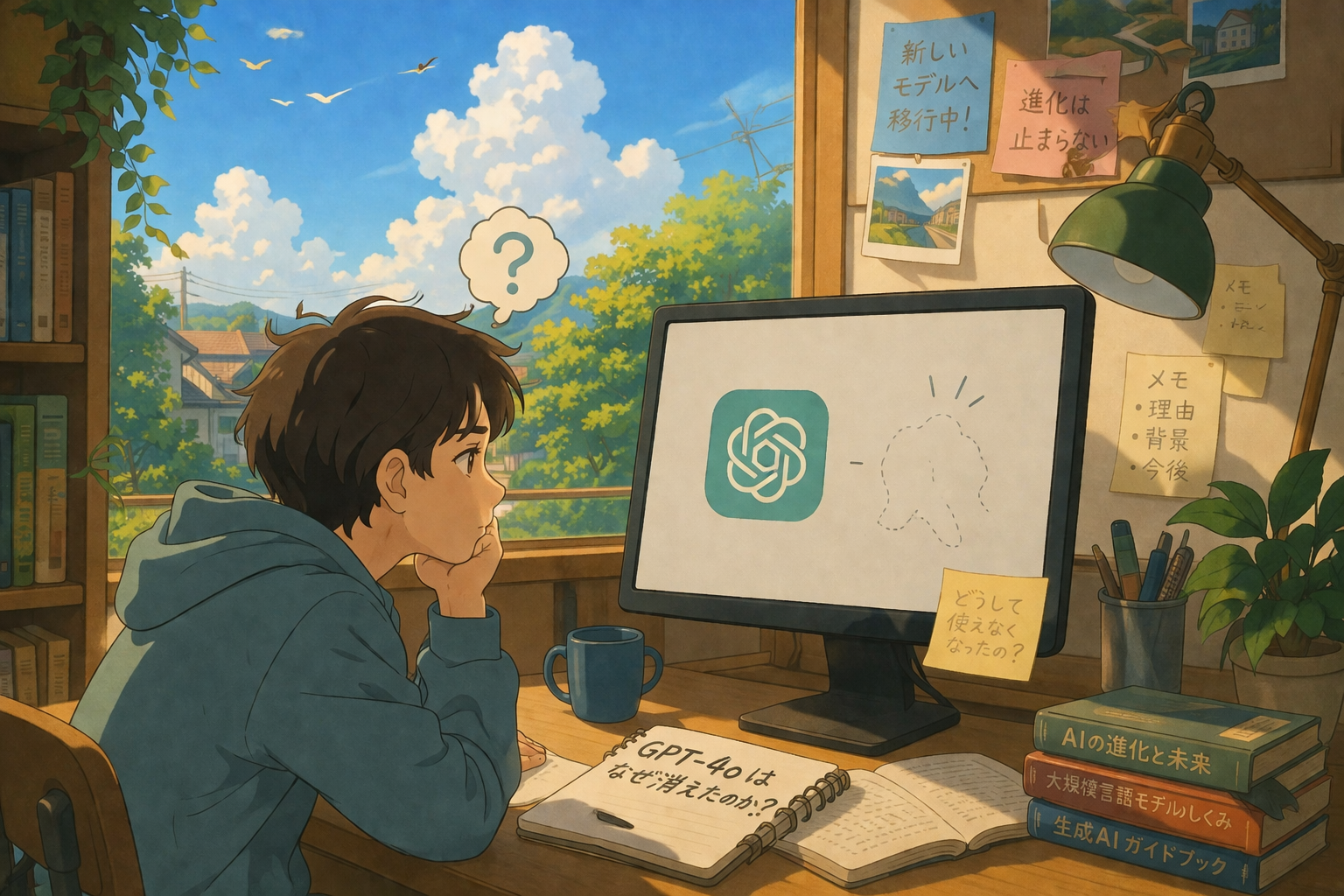
Many users felt as if GPT-4o suddenly disappeared from ChatGPT. In practice, though, it was retired as part of a planned model update rather than because of a technical failure. This article explains why GPT-4o was removed from ChatGPT, how that change fits into OpenAI's broader model strategy, and what happened to its features after the transition.
GPT-4o was officially retired from ChatGPT in February 2026
The short version is simple: GPT-4o was retired from ChatGPT as part of a planned model transition, not because it broke.
According to OpenAI's Help Center, GPT-4o was removed from ChatGPT on February 13, 2026. OpenAI also indicated that Business, Enterprise, and Edu environments completed their transition by April 3, 2026. At the same time, OpenAI's official materials said GPT-4o would remain available in the API for the time being.
So the change was not a full deletion of the model. It was mainly a retirement inside the ChatGPT product interface, paired with an automatic shift to newer models.
Retirement timeline at a glance
- Retired from ChatGPT: February 13, 2026
- Enterprise-related transition period ended: April 3, 2026
- API availability continued for the time being
- Users were moved to successor models
Benefits
- ChatGPT could standardize around newer, higher-performing models
- Search integration became stronger
- Reasoning performance improved
- Model behavior became easier to manage and customize
Drawbacks
- A familiar response style disappeared
- GPT-4o's distinctive conversational feel was lost
- Existing workflows needed adjustment
What to keep in mind
- GPT-4o was not fully deleted, only retired from the ChatGPT UI
- It could still be used through the API
- Image and voice features follow their own model paths
Practical observations
- Many users liked GPT-4o for its warmer conversational tone
- Right after the transition, some users were confused by the change in responses
- At the same time, search-related behavior clearly improved
Practical next steps
- Get used to the current GPT-5.3-series models
- Rework prompts that were tuned specifically for GPT-4o
- Review your custom GPT settings
The biggest reason for GPT-4o's retirement was model consolidation
OpenAI has generally moved older models out of the main ChatGPT experience as newer models become the default.
In official announcements, OpenAI explained the retirement of GPT-4o as part of a shift toward newer-generation models. In other words, this was less about one model failing and more about simplifying the lineup, concentrating development effort, and making it easier to move faster with new features.
Another commonly cited reason was that many users had already begun moving to newer models by the time the retirement happened.
Why consolidation happens
- To reduce the number of overlapping models
- To focus development resources
- To speed up rollout of new features
- To unify the ChatGPT experience
Benefits
- Faster update cycles
- More focused bug fixing
- Better search integration
- Stronger reasoning performance
Drawbacks
- Less freedom to keep selecting older models
- Old prompt habits may need to be redesigned
- Familiar behavior may change
What to keep in mind
- Model retirement is a recurring part of how ChatGPT evolves
- Similar transitions may happen again in the future
- Long-term use usually requires adapting to newer models
Practical observations
- A similar shift happened during the transition from GPT-4 to GPT-4o
- ChatGPT keeps evolving through generational updates
- Older models are increasingly hard to keep fixed in place over time
Practical next steps
- Reduce prompts that depend too heavily on one specific model
- Build more reusable, model-agnostic prompt patterns
- Make better use of search-integrated workflows
GPT-4o's strengths were carried into successor models
One important point is that GPT-4o's characteristics did not simply vanish.
OpenAI said in official materials that feedback from GPT-4o users was reflected in improvements to newer models such as GPT-5.1 and GPT-5.2. That makes the retirement feel closer to absorption than deletion.
In other words, even if GPT-4o itself is no longer selectable inside ChatGPT, some of the qualities users valued were carried forward into later models.
Characteristics that were carried over
- Natural conversational flow
- Creative idea generation
- A softer response style
- Better support for personalization
Benefits
- Newer models still retain much of the ease of use people liked
- Response quality improved
- Adjustment options expanded
- Individualized setups became easier
Drawbacks
- The behavior is not an exact match
- Response tendencies changed
- Users still have to spend time adapting
What to keep in mind
- The same prompt may produce different results on a newer model
- Output stability depends on the active model
- Some adjustment time is unavoidable
Practical observations
- Newer models are better at integrating search results
- Long-form structure tends to be more stable
- Updates to current information are handled more smoothly
Practical next steps
- Re-test important workflows on the newer model
- Update your output templates
- Make use of GPTs where they help
Why GPT-4o did not disappear completely
Technically, GPT-4o did not vanish altogether.
OpenAI's documentation made it clear that GPT-4o remained available through the API. So what disappeared was GPT-4o as a visible choice inside ChatGPT, not GPT-4o as technology.
That distinction matters, especially for developers and teams with existing integrations.
GPT-4o's current position
- Retired inside ChatGPT
- Still available through the API
- Some of its underlying strengths were inherited by newer models
- Elements of its behavior live on in successor systems
Benefits
- Developers could keep using it in existing workflows
- There was still some migration time
- Current systems did not have to be rebuilt immediately
Drawbacks
- General ChatGPT users could no longer choose it directly
- It was no longer available from the normal UI
- Future API retirement remains a possibility
What to keep in mind
- As of April 18, 2026, there was no official API end date confirmed in the source material used here
- Long-term dependence on older models is still risky
Practical observations
- Older models have been phased out before in similar ways
- ChatGPT is designed to keep moving users toward newer generations
Practical next steps
- Design future workflows with the latest model in mind
- Check where your systems still depend on GPT-4o
- Build a migration plan before another retirement happens
Summary
GPT-4o did not disappear without warning. It was officially retired from ChatGPT on February 13, 2026 as part of a planned transition to newer models.
The broader reason was OpenAI's strategy of consolidating models, improving performance, and pushing ChatGPT toward a more unified next-generation experience. At the same time, GPT-4o's most valued strengths were not simply thrown away. Many of them were carried forward into newer successor models.
For most users, the practical response is simple: update your prompts, test your workflows on the current standard model, and avoid relying too heavily on any single model for the long term.
It can be surprisingly reassuring to understand why a favorite model disappeared. But that kind of change is also part of how generative AI keeps moving forward.